Moving to Uruguay
K: Where are you from and when did you arrive in Uruguay?
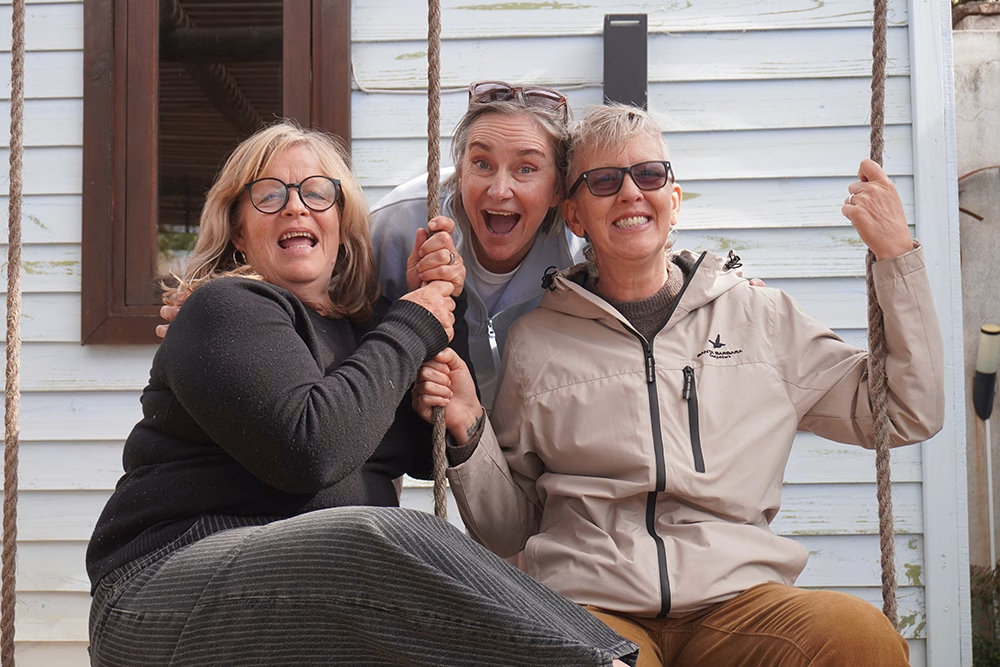
P&K: We are from the Northwest US, Seattle, Washington and we got here New Year’s Eve 2022, Pam’s birthday.
K: I have never, in the 25 years I lived here, heard of someone who DROVE all the way from the US to Uruguay, would you share a little bit about your decision?
P&K: We had never taken a vacation, and we were concerned about what would happen when we retired since we rarely saw each other during the workweek. I owned a restaurant, so it seemed like a chance for a nice, extended vacation, and we approached it that way.
We also have a dog that won’t go in a crate and can’t fly due to a stuffy nose. So, we drove partly for the dog, partly for the adventure, and also to ease out of our US lifestyle into something different.
K: How long did it take you?
P&K: It took 10 months. We were planning on a year and a half, but we got to Santiago de Chile and I was tired of living in the car. We had moved out of our house to sell it and prep another rental property, so we had been living out of suitcases for almost two years.
We looked at the map and realized we could get through Argentina and into Uruguay for my birthday. We still have a lot of South America we want to explore. The people everywhere were so kind.
A typical week for a retired couple in Uruguay
K: You guys are my neighbours, that is how we actually ran into each other. You live in the Old City, same as me. You ended up actually buying an apartment here. What made you choose the Old City? What was the attraction?
K&P: We began making friends and got used to walking around one-way streets. When we started to explore other neighborhoods like Palermo, we had constant near misses because we forgot to look both ways in just a month.
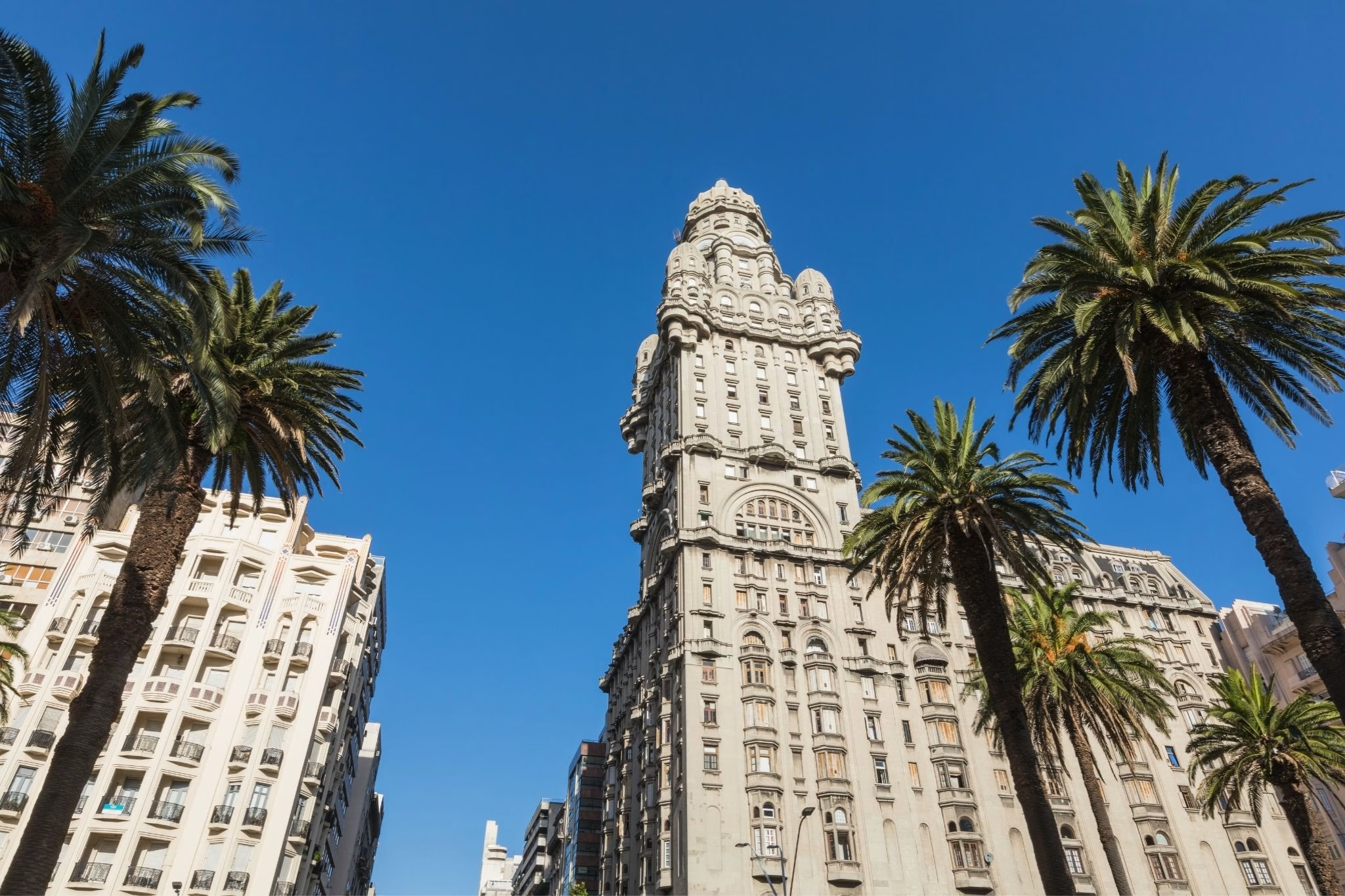
Cordón would have been attractive to us with its restaurant scene, but I developed a prejudice against two-way streets. The history and architecture here are amazing. We fell in love with Plaza Matriz right away and visit it every morning with our dog. If we walk past the plaza, she insists on going, so we sit for at least five minutes before continuing our walk.
K: How’s your typical week in Uruguay?
K&P: We wake up after eight or nine hours of uninterrupted sleep, which is a huge improvement for me. After having coffee, we take the dog to Plaza Matriz and decide what to do for the day. Sometimes we have breakfast at home, other times we grab a croissant at Cafe Flor or Federation Bakery. If we need a pan de campo, we get one.
If we’re exhausted, we take a nap; otherwise, we go on an adventure. We try to go out at least three to four times a week, more in the summer. In the winter, it’s easy to get stuck watching Netflix.
K: What about your dog? How are people towards her? Are businesses accepting?
K&P: Oh wonderful! She isn’t great with other dogs, but people just can’t stop staring at her because she looks like a cartoon. Little kids love her. We don’t bring her inside businesses out of preference. Our local grocer is lovely; if Kiernen is walking her without me, he can tell the grocer what he needs, and she will bring it out and take the money. If we’re together one of us will hold the dog while the other grabs the items, then we trade places.
Learning Spanish In Uruguay
K: Did you speak Spanish before you came? How do you feel speaking Uruguayan Spanish?
K&P: We took a 2-month course in Mexico, which was more like tourist Spanish with the wrong accent. However, it was enough to help us through the borders during our 10-month drive. The course gave us enough Spanish to interact with people, which was important as we wanted to involve ourselves in the culture and neighborhoods. Almost everyone was very patient and wanted to understand us.
We noticed the day we arrived in Uruguay that locals are very unforgiving about accents. The difference between “servi-i-eta” and “servi-sh-eta” (servilleta, a napkin) matters to them, and they seem unwilling to overlook it. I understand my accent is terrible, but come on, make the leap!
K: You had to run errands, go to the doctor and buy a property while having limited Spanish, how was that?
K&P: We always try to speak the language. Our realtor, Ignacio, speaks English. He has become one of our best friends and is always available to help with any problems. He assisted us for six months in finding this place, researching over 100 properties before we found the right one.
K: What would you say to people who do not speak Spanish? What would your advice be to them here?
K&P: Our advice for anyone moving to a new country is to immerse yourself in the culture. This involves learning the language, making friends, and going out. If you don’t want to be part of the culture, then moving might not be the right choice for you. You can’t expect to move here without eventually needing to learn some Spanish.
Life in Uruguay – the pros and the cons
K: What has surprised you for good about Uruguay?
K&P: Walking down the street, you see random people singing, not because they’re crazy but because they’re happy. Young or old, men or women, they just sing spontaneously. I find it charming and wonderful.
The water quality here is excellent, with tap water tasting like nothing, just as it should. We did a lot of research, so we expected good infrastructure and affordable, accessible healthcare. The produce quality is great too. Unlike the soggy hot house lettuce in the U.S., the local ferias and stores have fresh produce. It’s like a convenience store with everything you need, but much better.
K: What what has been difficult for you guys?
K&P: Not all public bathrooms have toilet seats or paper, which is a delicate topic, especially for restaurant owners. Also there’s bureaucracy everywhere, the process of buying or renting property here is not very transparent. It’s difficult to navigate, even with good Spanish, because there is no central listing service for real estate. Finding a trustworthy real estate agent and escrow agent is challenging.
K: How did you find someone?
K&P: We got lucky. A friend told us her brother sells real estate and speaks good English. We loved her, so we trusted her brother would be great too.
For our residency we used a Guru’Guay recommendation, Laura Canepa, she would do anything for us, so we keep our requests to important matters. When our car got towed while we were with her, she got on the phone, found out where it was, and took a cab with us to retrieve it. She got really angry because the sign was hidden behind a tree, even though it was there. She took pictures and argued passionately. It was about 2,000 pesos, a small amount, but it was the injustice of it that really drove her.
K: If someone says they’re thinking about moving to Uruguay, what would you say to that person? What would be essential?
K&P: If you don’t want to make the effort to involve yourself in the culture, you won’t have a good time, no matter where you live. You need patience because things are different here—there are no Walmarts. You might have to go to several places to find what you need.
For example, we needed 20 screws and had to visit three different stores to get them all. Everything is within walking distance in Ciudad Vieja, which makes it part of our daily adventure. Living in the Old City means we have a lot of smaller stores. If we lived in the suburbs, we’d have more big box stores and need a car.
Healthcare in Uruguay (as a retired couple)
K: You told me earlier Pam that Laura, who is a relocation specialist, has helped you regarding health issues when you had an accident, how was that? Was it covered by your insurance?
K&P: After 25 years, we got electric bikes, which are faster than expected. A kid ran one way, I went the other, and I landed on my knee on a concrete bollard on Sarandí pedestrian street. The next morning, I couldn’t put any weight on it, so we had to call an ambulance because I couldn’t get down the stairs.
There was a doctor and nurse who confirmed nothing was broken and that it would be fine. They offered to take me for an X-ray, so I went and waited about an hour. After the X-ray, they offered an ambulance ride home, but we chose to drive instead. It took about three or four months before the pain was gone.
We’ve been very happy with the quality of service here. What surprised me the most is that there’s very little waiting. You get a slip with your appointment time, and the doctor sees you at that time. In the United States, it’s common to wait an hour or more past your appointment time.
K: How did you choose your health insurance? Did you look into different options? Can you remember some of them?
K&P: Laura helped us choose. We just needed to provide our age and medical history, which here is more about the story of your body and doesn’t require paperwork from the U.S. They don’t charge extra for past illnesses. Laura narrowed it down to Cosem and Española, and we chose Española for its higher number of English-speaking doctors. Not all do, and we’ve had some difficulties, but that’s on us for not speaking better Spanish. We have friends who would go with us and help translate without taking money, but we don’t want to take advantage. Learning Spanish has been important; when we were driving through small towns with no English, my Spanish was better because I had to use it. Here, I got lazy.
K: What are the costs of the medical insurance?
K&P: We are 60 and have had some health issues in the past. With all the add-ons, we pay about USD 80 each per month.
Rapid fire round
K: Life in Uruguay is…
K&P: Life in Uruguay is delightful. It’s sunny here and there’s no rainy season, so it rains occasionally. I love that it’s very muy tranquilo, meaning just chill. Life in Uruguay embodies the attitude that everything is going to be okay. The people are kind and easy to get to know.
K: Before I moved here I wish I had known…
K&P: I wish I had known to buy more shoes before moving here, as I have large feet for a woman (size 41 or US 11) and it’s hard to find shoes that fit.
I also wish I knew that although we left our cordless tools at home because the charger wasn’t compatible with 220V, we could have just bought a compatible charger here. These tools are very expensive, and we could have saved hundreds of dollars by buying one charger and keeping all our tools.
K:The biggest difference between my life now and before is…
K&P: That I don’t have to work! I love not having to work anymore. I used to run a restaurant and worked six or seven days a week. Now, we smile a lot and are very happy here.
The biggest difference in my life is that we could never have retired comfortably in the U.S., even with a pension and smart choices. One of us would still have to work part-time to afford healthcare.
We love the adventure of living here and are so happy with our decision. Doing research first was crucial.
K: Some of the important reasons we chose Uruguay was…
K&P: There isn’t a huge income disparity here, and labor protections are strong, which improves the quality of life for everyone. When we told people from various Central and South American countries we were heading to Uruguay, they all mentioned the quality of life, calidad de vida. That’s what this country is known for.