
Living in Punta del Diablo, Uruguay: A lesbian couple’s first year
Shelley and Chas moved from Georgia to Punta del Diablo, Uruguay. Real monthly costs, LGBTQ community, bringing cats, residency + advice.

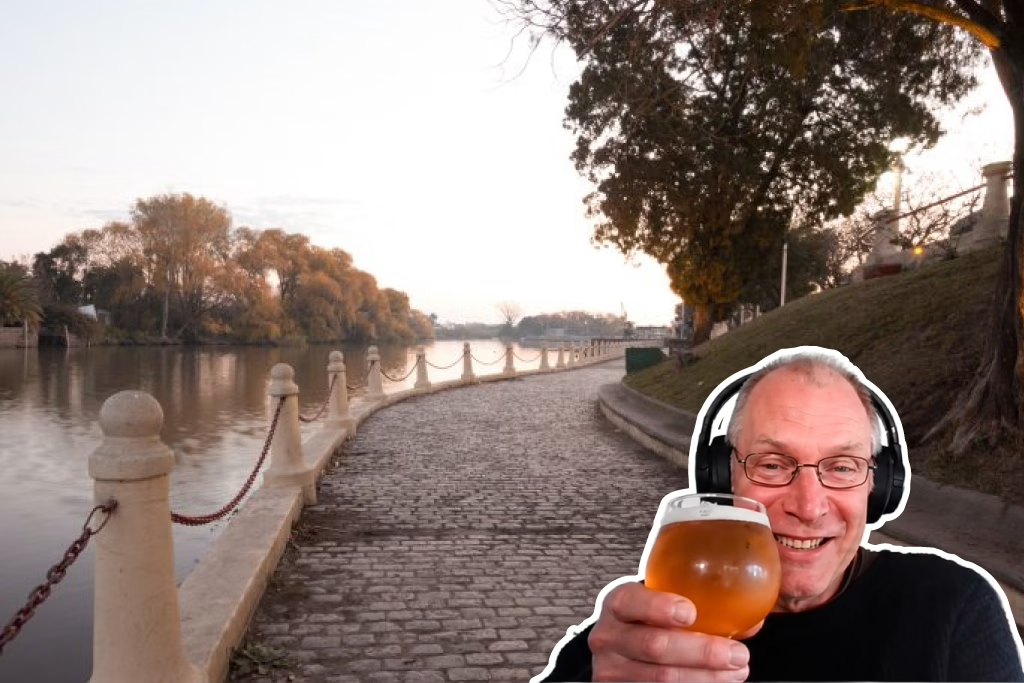
For Magnus, a Swede who moved to rural Colonia with his family in 2015, the answer is both inspiring and sobering. He and his wife are biologists. They built a low-cost life in western Uruguay just outside of Carmelo, a well-known wine town in Uruguay with a straw bale home (super well-insulated), their own water source and waste systems and homegrown food.
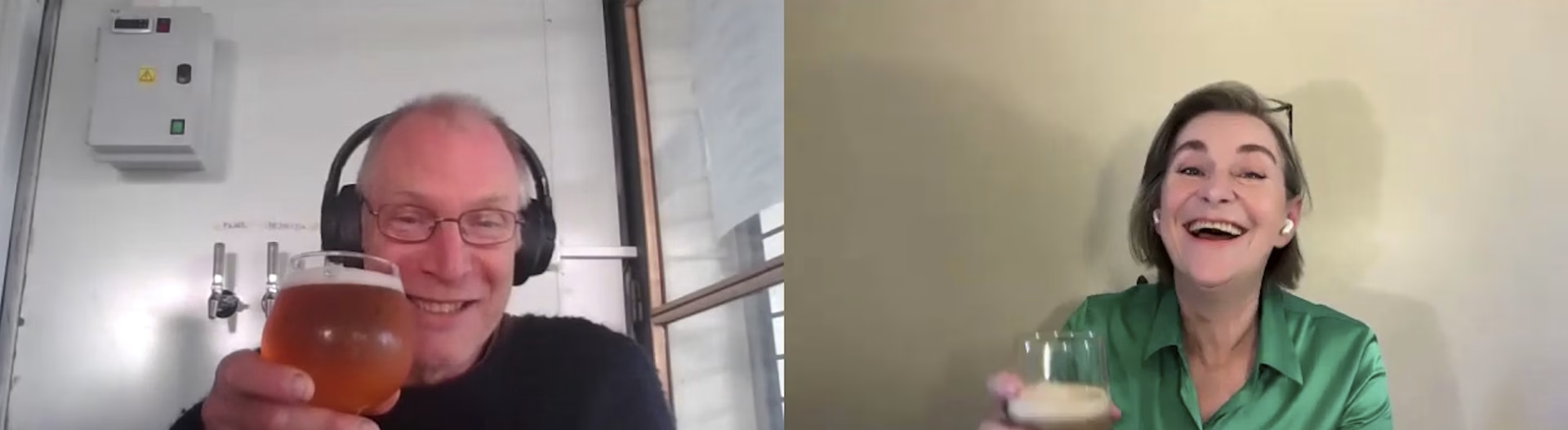
Magnus shares his story in an in-depth video interview for Guru’Guay’s YouTube series “Living in Uruguay (as a foreigner)” — a collection of candid conversations with foreigners about the realities of making a life here.
Watch Magnus’s interview here.
What they found is that living off the grid in Uruguay is possible – but it’s hard work, and it is not the same thing as being fully self-sufficient.
Magnus and his wife first imagined a slower, lower-consumption lifestyle while living in Norway, where both worked as biologists. Their original “plan B” was to leave behind a more consumer-driven society and create a simpler life on a small piece of land.
At first, the choice was between southern Sweden and Uruguay. But after visiting Uruguay for the first time, Magnus felt immediately at ease. He describes arriving in Colonia and sensing that the pace, atmosphere and way of life suited him.
That first impression turned into a long-term plan. The couple bought land and, after years of saving and postponing the move, finally relocated with their children in 2015.
For this family, off-grid living is not an abstract idea. It means handling the basics themselves. Their setup includes:
On the practical side, Magnus says the off-grid part works. The family is not dependent on standard utility services and their regular household costs are low.
This is one of the most useful lessons in Magnus’s story: off-grid living and self-sufficient living are not the same thing.
He and his wife arrived believing they could produce far more of their own food than they actually can. As biologists, they knew plants. But, as he puts it, being a biologist is not the same as being a farmer.
The family grows onions, garlic, kale, tomatoes, potatoes, sweet potatoes, beans, and other vegetables. They also keep chickens. That makes a real difference to their food bill and to the way they live, but it does not mean total self-reliance.
A more realistic picture of subsistence in Uruguay is:
For foreigners dreaming of rural life, that distinction matters. Uruguay can support a more independent lifestyle, but it does not remove the need for skills, savings, and patience.
One reason this family’s lifestyle works is that they prepared for it financially. Before moving, they spent years saving money in Norway. In the end, they lived on savings for 11 years. Magnus is direct about what this means: if you want to live this way, you need money at the start.
Their costs stay manageable because:
As we always say here at Guru’Guay, Uruguay is not a cheap country. The cost of living can be high if foreigners from Europe or North America want the same standard of living they had back home. Cars are expensive to buy, expensive to keep, and fuel is costly too.
So while off-grid living can lower monthly expenses, it does not remove the need for capital. In practice, it works best for people who arrive with savings and are willing to keep their lifestyle simple.
The family’s first home in Uruguay was a container house ordered before they moved (you may be surprised but you’ll see these about the country quite frequently). Magnus strongly advises against paying in advance for a house from abroad. It’s worth watching the full interview just to learn more about this. In their case, the house arrived, but the quality was very poor.
Later, he built a straw bale house with clay plaster, learning as he went. That home is small, but much better suited to the climate and to the family’s needs.
This matters because many foreigners underestimate how much their quality of life in Uruguay will depend on housing. Off-grid systems may work beautifully, but if the house itself is badly designed, winter can become the biggest challenge of all.
One of the more encouraging parts of Magnus’s experience is how positive he is about public healthcare in Carmelo — especially emergency care. And there are no extra costs — not even for prescriptions — beyond the social contributions he pays through his craft brewery business.
What he values most is the human side of the system. He finds it more personal than what he was used to in Scandinavia. It’s worth watching the full interview because Magnus is definitely careful not to over-claim. His family has been lucky enough not to need specialist care.
We also talk about how the same doctors work in both the public and private systems in Carmelo (this is very common in Uruguay) so while the public hospital is definitely not as spiffy as the private, the staff who attend you will generally be the same professionals.
Education is another area many foreigners worry about before moving to Uruguay.
Magnus’s children are now in their mid teens. They attended a local public primary school and secondary for a year or so before moving to a private school in Carmelo. His comments are nuanced. His family loved their local public schools though, despite the rural setting, kids were very noisy and unruly in class.
But Magnus says his friends back in Scandinavia report the same. So his broader concern is less about Uruguay and more about schooling worldwide. He feels schools often expect children to fit the structure, rather than adapting the structure to children.
The breaking point turned out to be food: as vegetarians, they had been sending the kids with a balanced packed veggie lunch. However a new school director insisted that the family complied with the national requirement: that the children eat the lunch provided by the school and that packed lunches were not allowed. We’re in Uruguay, so lunches always include some type of meat. There were no vegetarian options. Magnus’ children initially just removed the meat from their meals but these are growing children and the family were concerned about the lack of a balanced diet. They moved the kids to a private school where packed lunch was allowed.
Note: Only all-day public schools supply lunch. Most schools in Uruguay are not all-day, see our article on education in Uruguay.
Nowadays the kids are back at public school attending in the evening (from 7-11pm, I know, you have to watch the interview).
Even with low living costs, the family now need to source some local income. Magnus’s partner is Argentine and is working part-time as a teacher. For Magnus, that came through a small craft brewery in Carmelo.
His account of setting up a business in Uruguay was pretty positive. He says opening a small company was straightforward thanks to having a Spanish-speaking spouse. The harder part was understanding taxation once the business was up and running.
In his case, a small simplified regime (for sole proprietors with an annual income of less than roughly 40,000 US dollars) helped keep things manageable, but alcohol production also brought extra tax complications — which even the local tax office has not been able to explain to him.
He also has a business partner who is local and who provides the permises, so the brewery doesn’t pay rent. A pretty exceptional case.
His experience also underlines one big point: Spanish matters. For years, Magnus says he got by with limited Spanish because his wife handled much of the paperwork. Once he needed to run a business himself, he’s needed to step up and really work on his Spanish.
For foreigners thinking of launching a small venture in Uruguay, the lesson is clear:
Magnus is very clear. If you want to pursue off-grid living in Uruguay, in his experience the essentials are:
He also makes a point that many people need to hear: making money in Uruguay can be difficult, especially as a foreigner. The lower-cost off-grid lifestyle helps, but it does not solve everything.
This kind of honest, hard-won perspective is exactly why the Guru’Guay “Living in Uruguay (as a foreigner)” interview series exists. Each episode goes deep with a real foreigner — their mistakes, frustrations, surprises, and lessons — so that you can go in better prepared. If Magnus’s story resonates with you, it is well worth watching his full interview and exploring the rest of the series on YouTube.
For Magnus, the answer is yes. He misses the mountains of Scandinavia, but not the stress. He values the slower pace, the warmth of people, the quiet of rural life and the sense that his family has built something more grounded and resilient.
Uruguay can be an excellent place for foreigners who want to step away from a high-cost, high-pressure lifestyle. But it works best when people come with their eyes open. Off-grid life here is possible. Partial subsistence is possible. Raising children, using public healthcare, and even building a small business are all possible too.
What is not realistic is expecting any of it to be easy.
If you are searching for a real-world picture of off-grid living in Uruguay, that may be the most valuable lesson of all. And if you want to hear it in Magnus’s own words — along with stories from dozens of other foreigners who have done the same — the Guru’Guay “Living in Uruguay (as a foreigner)” series on YouTube is the place to start.
Guru’Guay thanks Magnus for his time and generosity. If you’d like to meet him, go have a beer at his brewery Birra Pasto Azul in Carmelo. Check the link for opening days and times
Living in Punta del Diablo, Uruguay: A lesbian couple’s first year
Shelley and Chas moved from Georgia to Punta del Diablo, Uruguay. Real monthly costs, LGBTQ community, bringing cats, residency + advice.

Carolina Sprengel Real Estate – Investing & selling
Investing in Uruguay real estate or selling your property? We love this realtor for sharp financial analysis and honest, hands-on service.

Alto de la Ballena – Pioneering Maldonado winery
Tiny Maldonado winery producing some of Uruguay’s finest wines. Alto de la Ballena was the first to make wine in Uruguay’s top wine region.

Casa Mara Uruguay – Designer hillside hideaway
Casa Mara Uruguay: a sierra hillside hideaway with three cabins, a natural infinity pool and not a single power line in sight.

Uruguay – most gay friendly nation in South America
…and 3rd friendliest in the world according to Equaldex. Homosexuality has been legal here almost 100 years.

Montevideo Carnival 2027 dates
Hot off the press! The world’s longest carnival is in Montevideo Uruguay and we’ve got the dates.

Treehouse Ecolodge – La Barra eco-hotel
Your treehouse perched in a pine-forest 2 minutes from the beach. The most unique La Barra hotel experience ever.

Baco – Montevideo’s top wine restaurant
A French bistro with probably the longest wine list in the city and multiple by-the-glass choices is one of the best Montevideo restaurants.

Namasté — Vegetarian restaurant in Montevideo
Looking for vegetarian restaurants in Montevideo? Namasté is a family-run restaurant serving home-style food in a relaxed, colourful setting.

Dance tango in Uruguay. Whether a complete newbie or you already dance, the tango scene in Montevideo is a great way to make friends.
Shelley and Chas moved from Georgia to Punta del Diablo, Uruguay. Real monthly costs, LGBTQ community, bringing cats, residency + advice.
We interview foreigners in Uruguay who moved here from principally English-speaking countries so you can learn from their mistakes.
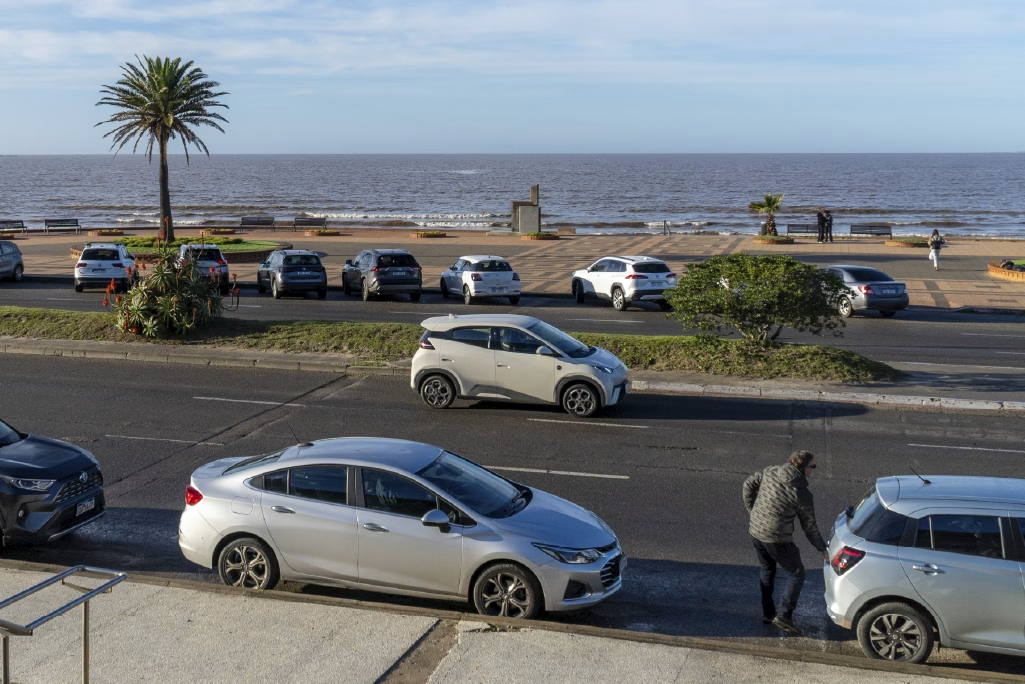
Electric vehicles Uruguay: how costly gas, a clean grid and zero tax made BYD king — and pulled in Tesla.
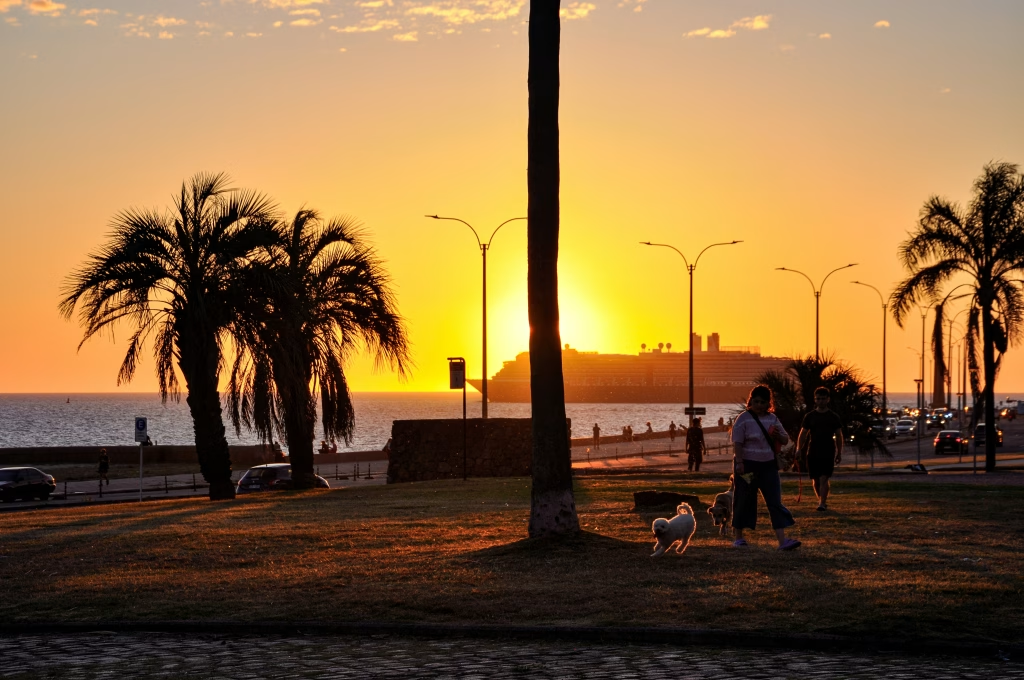
People regularly ask me if many Americans are moving to Uruguay and they’re always shocked at the numbers.
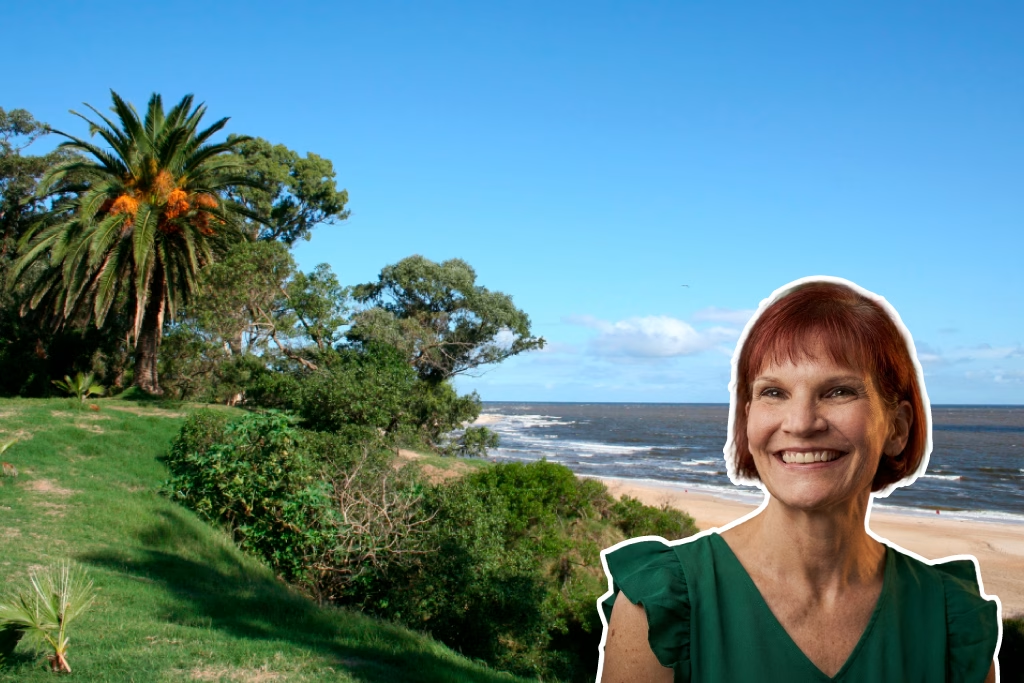
Living in Uruguay beach towns offers a slower lifestyle and affordable living. Ann and her partner left the US to start living in Uruguay.
We perused Reddit to find foreigners’ most asked questions about Uruguay and answer so you can decide if Uruguay is the Plan B you’re looking for.