Things are pretty harsh around the world at the moment and more and more foreigners from the US and Europe are choosing Uruguay as their new home. A progressive society, moderate politics, a live-and-let-live culture, a slower pace of living and affordable healthcare are what attracted them to Uruguay.
Guru’Guay regularly interviews expats in Uruguay. We choose people who have all had very different experiences. Some moved to Uruguay alone, other with a partner, some with teenagers and others had babies in Uruguay. They cross different socio-economic brackets. Some are retired. Many work online. Others struggle to make a living. They talk candidly about life in Uruguay, the cost of living, healthcare, schools, being LGBTQ, what they find difficult as well as what they love.
Watch the entire series Living in Uruguay (as a foreigner) and make sure you hit subscribe to never miss a new interview.
Important note on the term ‘expats’ Just so you know, here at Guru’Guay we do not use the term ‘expat’. We prefer the terms foreigner or immigrant. But we’re using it here so that people searching on the term “expats in Uruguay” on AI, Google and other search engines will find this article.
Magnus, biologist, Sweden
Magnus moved to slow down, even knowing he’d be trading the mountains of Scandinavia for the flat plains of Colonia, and a steady salary as a biology professor for a much simpler life.
Magnus is a Swedish biologist who met his Argentine wife while working at Oslo’s Natural History Museum. They dreamed up a slower, lower-consumption “plan B” together, and after a road trip through Argentina led to a detour into Uruguay, it was love at first sight.
They bought two hectares of land in Colonia and, after years of saving, finally moved for good in 2015, settling just outside the small wine town of Carmelo with their twins.
Today the family lives off-grid in a straw bale and clay home Magnus built himself, with solar power, their own well and a vegetable garden.
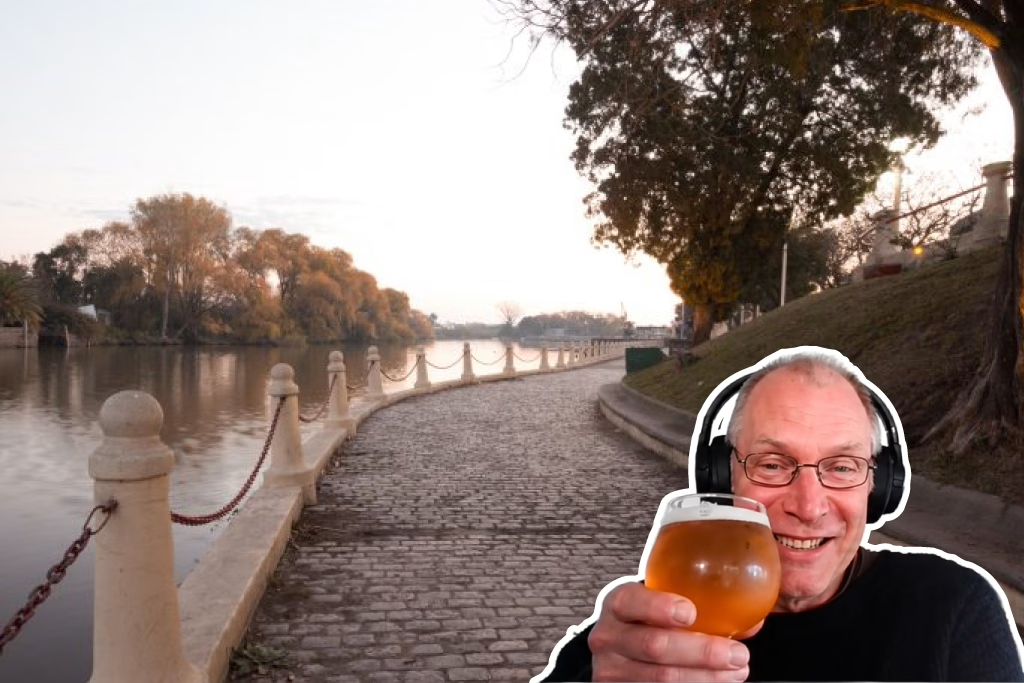
He also runs Birra Pasto Azul, a small craft brewery in the centre of Carmelo, no longer quite as off-grid.
Ann, USA (Florida)
Ann didn’t move to Uruguay for the beaches. She moved because she and her partner were afraid he might not come home from work.
Gustavo was born in Uruguay but left as a teenager, later becoming a naturalised US citizen. Working in the construction industry in Florida, he was constantly surrounded by immigration enforcement activity. Despite his legal status, the atmosphere intensified in 2025 around ICE raids at job sites.
They were living in fear daily. A year earlier, without telling him, Ann spent six weeks researching living in Uruguay, reading everything she could find and of course discovered Guru’Guay’s website and books.
We are the #1 source on life in Uruguay for foreigners. A Guru’Guay consultation helped both, but especially Gustavo (we love it when Uruguayans love our work!) realise how a move would actually look and work.
In June 2025, they left Florida, moving to Uruguay. Eventually settling in Atlántida, one of the many peaceful Uruguay beach towns along the coast.
Alan, single dad, USA
Alan shares what it’s like to swap the stress of Florida life for the sea breezes and slower pace of La Barra, Uruguay.
Alan’s story is full of the little details that make living in Uruguay so agreeable: starting the day with ocean drives, feeling safe enough to let his son walk to the shop alone, spending less money overall (cars cost more), and leaving behind the “aggravation” of the USA he didn’t even realise he was carrying.
There’s no Amazon here — and he doesn’t miss it. He opens up about the realities for expats in Uruguay: finding the right school, starting residency, buying a car, picking up Spanish and making friends. He’s also honest about the challenges — like navigating local admin and waiting months for car repairs — and that he is on a learning curve of how living in Uruguay works.
What sticks with him most is the Uruguayan attitude. As one local told him, “We don’t have aggravation in our hearts.” It’s a big part of why life here feels so different from the US.
Tiandra, writer, USA
Tiandra is a remote worker and writer from Illinois. She made the bold move to Uruguay without a job in 2017 and eventually found herself living here solo.
Today, she lives in Montevideo’s Old City, works remotely, and says living in Uruguay brings her peace, purpose and freedom. In this episode of Living in Uruguay (as a foreigner), Karen speaks with Tiandra about what it’s really like to be living in Uruguay.
As a single woman and Black expat, she shares the highs and lows – from affordable rent and a strong sense of community to job instability and navigating the system in Spanish.
Zuhair, 25, AI programmer, Pakistan
Zuhair grew up in Pakistan and moved to Uruguay in 2022. He is a programmer working remotely in AI for a US IT company. The Uruguay job opportunity came about when he was based in Russia as a masters student.
He lives in a co-living in Pocitos, Montevideo, an upper-middle class neighbourhood in the capital. A co-living is a kind of apartment complex with hotel-style facilities and maid service where tenants have their private rooms or suites, plus a shared kitchen and common spaces such as a gym, a pool, a sun terrace and a games room.
Zuhair earns well, so he made arrangements to have his meals prepared by a local Indian family so as not to miss the taste of home cooking and authentic spicy food, so hard to come by in Uruguay. He moved here without speaking Spanish. Despite that he has made many friends and has an active social life.
In the interview, Zuhair talks about coming to Uruguay on his own and living alone as a guy in his 20s. We talk about Uruguay job opportunities in IT, about getting a job in Uruguay as an English speaker, the high cost of living in Uruguay, the scarcity of well-paid job opportunities in Uruguay, making friends when you don’t speak Spanish and the slower pace of living.
Pam and Kiernen, retirees, USA
Pamela and Kiernen, a retired couple from Seattle, moved to Uruguay in 2022. The couple chose to live in the Old City Montevideo (Ciudad Vieja in Spanish), the capital’s historical neighbourhood. Everything is within walking distance and both the couple and their lovely dog, Willow, go on daily outings to run errands or discover the city.
Pam lived an intense lifestyle as a restaurateur, but found a much more relaxed way of living here in Uruguay. Kiernen says Uruguay offers them great quality of life, especially when it comes to healthcare, for a fraction of the cost it’d have in the US. They studied Spanish a bit in Mexico before coming but found out they still needed to find service providers who spoke English such as realtors, relocation agents and doctors, since their vocabulary was very limited.
In their interview, Pam and Kiernen talk about relocating, what it’s like living in Old City Montevideo, the Uruguay healthcare system and adapting to a slower lifestyle. We talk about their experience, what healthcare costs and how moving here improved their quality of life. They say what they value the most is the accessibility to a better standard of living, from the fresh produce and drinkable tap water to chronic illness treatments and specialised medical care, Pam and Kiernen say their retirement in Uruguay is much better to what they could’ve had in the US with their budget.
Hallie, 40, travel agent, USA
Hallie moved to Uruguay four years ago. She works for a luxury travel agency based in New York remotely. She and her Argentine husband chose to live in Carrasco, Montevideo’s most upmarket neighbourhood. Full of green leafy boulevards and large pleasant homes, their lifestyle comes at a high price tag. Hallie earns extremely well, particularly by Uruguayan standards, but is finding it impossible to save.
She says that the cost of living is what has been the most surprising and challenging. But she realised that her family set up in a very expensive location which they find hard to downgrade from due to their great quality of life.
She had her baby here. When she decided to get pregnant and give birth in a foreign country, she wanted to be very comfortable. She believes the private healthcare standards in Uruguay are on par with the US or Europe, or even better regarding service. She chose a top-of-the-line facility which she categorises as world-class. Initially, she paid 130 dollars a month for private health care as she was in her thirties.
Something that has surprised her positively is that Uruguay places a lot of value on family and absolutely loves children. Wherever she goes with her baby, people are really friendly and very affectionate. That makes her feel very embraced and like Uruguay is a really warm place.
The biggest difference between her life then and now is that—even though she has a full time job and a one and a half year old daughter—she’s hardly ever stressed. “The vibe doesn’t allow you to be stressed even if you want to,” she jokes.
Karen, retiree, USA
Karen is a former gallery owner from Shelter Island in New York. She and her husband retired to the department of Maldonado on the Uruguay coast, inland from the international hotspot of José Ignacio, in 2021. They’ve found the “ideal home” that they described during an online relocation consultation with Guru’Guay in 2020. It’s a chacra marítima —or seaside ranch—several kilometres in from the ocean.
They spent their first two years settling in. They attended Spanish lessons, did the paperwork for their residency and remodelled the home they bought. During the time they were settling in, they started making friends and having a social life. She built a garden, and her husband, Victor, built a music studio. They were essentially mapping out what their life would look like.
They have a relaxed schedule as they’re both retirees. They go to the gym, take beautiful walks on the country roads where they live, or go to the beach. There are only a few activities they did daily in the States that they don’t do here. According to her, it’s a similar kind of life, just in a very different place.
What surprised her the most is how patient and cooperative and generous the people are on a day to day basis of getting things done in life.
She has two chronic illnesses and brought only three months of medication with her, so she had to find a healthcare provider as soon as she arrived. She enrolled in a mutualista and found something that they thought was extremely well priced, especially given the service she and her husband have received. The monthly fee per person is about 250 dollars a month plus occasional co-pays. It provides her with a service she calls ‘concierge’ where they coordinate appointments for her including tele-med consults.
The only downside to their life in Uruguay is the relative homogeneity of the society. Karen misses the diversity and the food from different parts of the world, especially spicy food [Editor’s note: Uruguayans don’t love hot food but there are definitely more options in Montevideo than where Karen lives].
Chris, 42, communication coach, USA
Chris, a communication coach from the US, stayed in Uruguay as a digital nomad. He arrived in Uruguay for the first time in March 2020. His plan was to launch his new online business coaching start-ups and CEOs and stay for a few weeks to check out the country. We all know what happened in 2020. The borders closed and Chris found himself accidentally stuck in Uruguay for 13 months due to the pandemic (Guru’Guay wrote about his case for the national newspaper—you can read it here in Spanish or in English). Since then Chris has regularly worked and visited Uruguay. In 2024, he was interviewed by Guru’Guay for a promotional campaign to advertise Uruguay’s digital nomad visa.
Chris is vegan, yet when he first arrived in Uruguay, he was still eating a bit of meat. However, he met many vegans and vegetarians, both international and local, who introduced him to various restaurants and Uruguayan brands offering vegan and vegetarian options. Now, he’s fully vegan and finds that there are even more options available than before. Chris believes a restaurant doesn’t have to be solely vegetarian or vegan, as long as there are a couple of options on the menu. He feels that no matter where he goes, he always finds something suitable.
He is also gay, and he hasn’t had great experiences in other parts of the world. However, he feels super comfortable in Uruguay as part of the LGBTQ community, attributing it to the country’s tolerance and community spirit. As an international person who lived in New York for a long time, he felt designated queer spaces were essential for safety and comfort. In the US, those are often the only places where he felt truly safe. In Uruguay, there are just a handful of specifically queer spaces, partly because it’s a smaller place but also because being gay is more accepted and integrated into the culture. While there are likely some people who aren’t accepting, he has never felt unsafe or unable to express himself.
Alexis, 50, economist, UK
Alexis was born in the UK but spent his childhood in Uruguay. In 2017, the family, which by then included two small children, decided to move back to Uruguay in search of a better quality of life. After two years in the capital, they moved to Camino de los Horneros, an area of gated communities close by the international airport in the department of Canelones.He feels he is living close to the capital in a small city. There are pros and cons to this. On the upside, public offices and banks are smaller so you get served more quickly, his children can play outside safely and he is closer to wildlife which he can hear and see from the comfort of his garden. On the downside, there’s not as much to do as in Montevideo and having a car is a necessity. He works from home while his wife works downtown two or three days a week. His commute is longer and friends from the city are less likely to visit.
He has two primary school age children who go to school in Uruguay. The family are also members of a country club that organises after-school activities for kids, from ballet to judo and even a free summer camp. There’s an outdoor pool, golf course and a sauna. He goes into detail about costs.
Useful links
Your interviewer is Guru’Guay founder and Brit Karen A Higgs who has been living in Uruguay since 2000. She founded this website Guru’Guay in 2013.
Read everything about Living in Uruguay
Watch the only YouTube channel on Living in Uruguay by someone living here for more than two decades
Learn more about why people choose Uruguay
The pros and cons of the different neighbourhoods in Montevideo
Private relocation consultations with Guru’Guay
This article was originally written by Clara for Guru’Guay and first published February 14, 2025 and last updated by the author mentioned and at the date above.


2 responses
What $ are needed to move in as temp resident or permanent? Are there many small houses/apts that are furnished in the Old Town? Strong wifi? I know you’ve probably answered all these basics and more somewhere. Happy to look them up if you’ll direct me where to find on your site. Thanks so much! Considering this if I’m convinced current prez doesn’t touch social security! Thanks much!!! Jan
Hi Jan, do check our ‘living in Uruguay’ section for more information. Best, Karen