Blacklisted: The story of a teacher during the Uruguay dictatorship

A member of the Guru'Guay team shares her great-aunt's story, highlighting the dictatorship's lasting impact on Uruguayans.
By Clara for Guru’Guay
uruguay dictatiorship
The Archives of Terror (Archivos del Terror)
Last updated on May 30, 2025

Store

Find Guru’Guay products and services for your travel or relocation to Uruguay

Vacation

Relocation

[the_ad_group id=”331″]

I’d say every family in Uruguay had someone touched by the dictatorship—whether in the military and paramilitary groups propping up the regime, or the insurgent guerrillas that were against it. Mine had both. My father’s mother was a military nurse; his father, an army instructor. To this day, Dad can’t set foot in memorial museums, watch documentaries about Uruguay’s dictatorship, or even catch a news segment about it without tears welling up. On my mother’s side? Seditious sympathisers, union organisers, intellectuals—or at least, that’s how the military files I read labeled them.

One in three Uruguayans have a family member directly affected by the dictatorship—or more, as is my case. Many left the country and lived in exile to avoid political persecution, like artist Damián Ibarguren.

I’ll tell you my great aunt’s story. Bright young woman, a student, a teacher, a psychologist, a dangerous intellectual harbouring seditious ideas and taking part in revolutionary leftist insurgency. Or so the files say.

Looking back, it’s always easy to see the signs of an authoritarian regime, but when you’re in the thick of it, normalising what you should protest becomes a form of self preservation. Uruguay didn’t become a dictatorship overnight, that’d have inevitably led to widespread dissent. The process was gradual enough to avoid raising alarms until it was too late.

The Archives of Terror (Archivos del Terror)

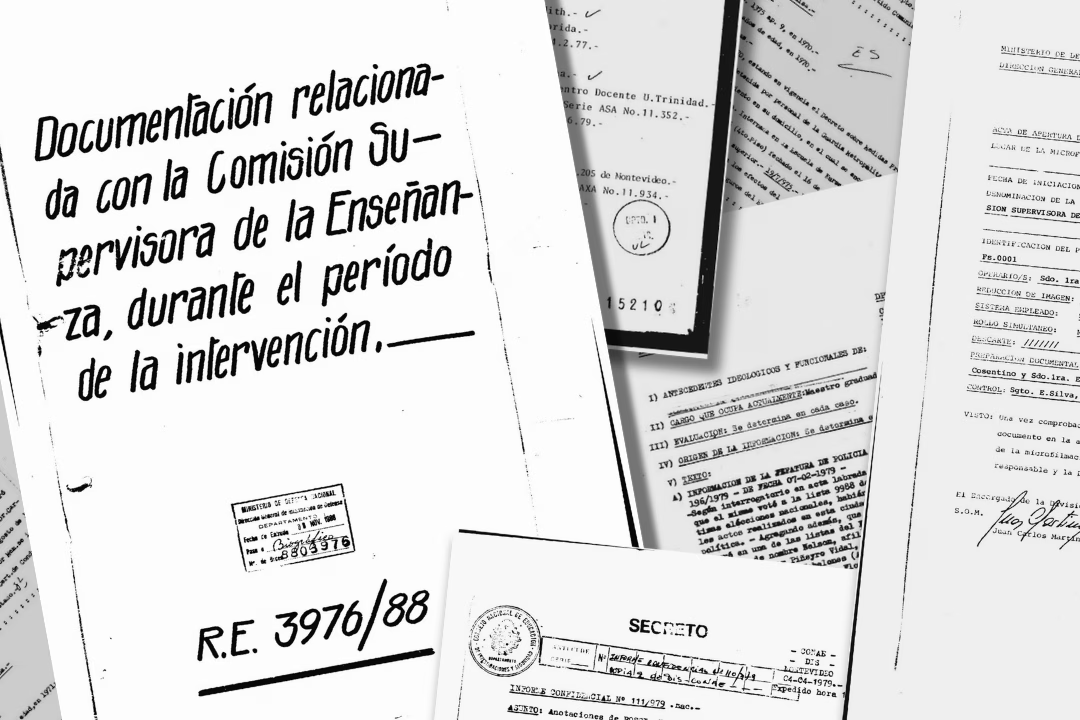
My great aunt is my mom’s aunt, the eldest sister to my grandma. They had a peculiar surname, only found in that family, so perusing the Archives of Terror was pretty easy. These records were unearthed in 2006 and detailed thousands of police and military proceedings, from reports on fabricated crimes to guarantee a subversive’s detainment to lists of civil servants and teachers suspected of wrong-thinking.

These files were created by police and military forces from the 1960s, including during Uruguay’s civil-military dictatorship. The archives contain only what the repressive regime chose to keep. Many documents were destroyed or remain missing. Some records include false, manipulated, or coerced testimonies from informants and torture victims. Despite this, they reveal how state terror operated.

She was the eldest of six siblings, worked as a schoolteacher and remained unmarried during this period. She regularly visited her two imprisoned brothers—one held at Punta Carretas (known for former president Pepe Mujica’s detainment and subsequent escape) and the other at Punta de Rieles. Their incarcerations stemmed from political activism: the first was a guerrilla operative in an armed revolutionary group, while the second was merely a factory worker who went on strike.

uruguay dictatorship
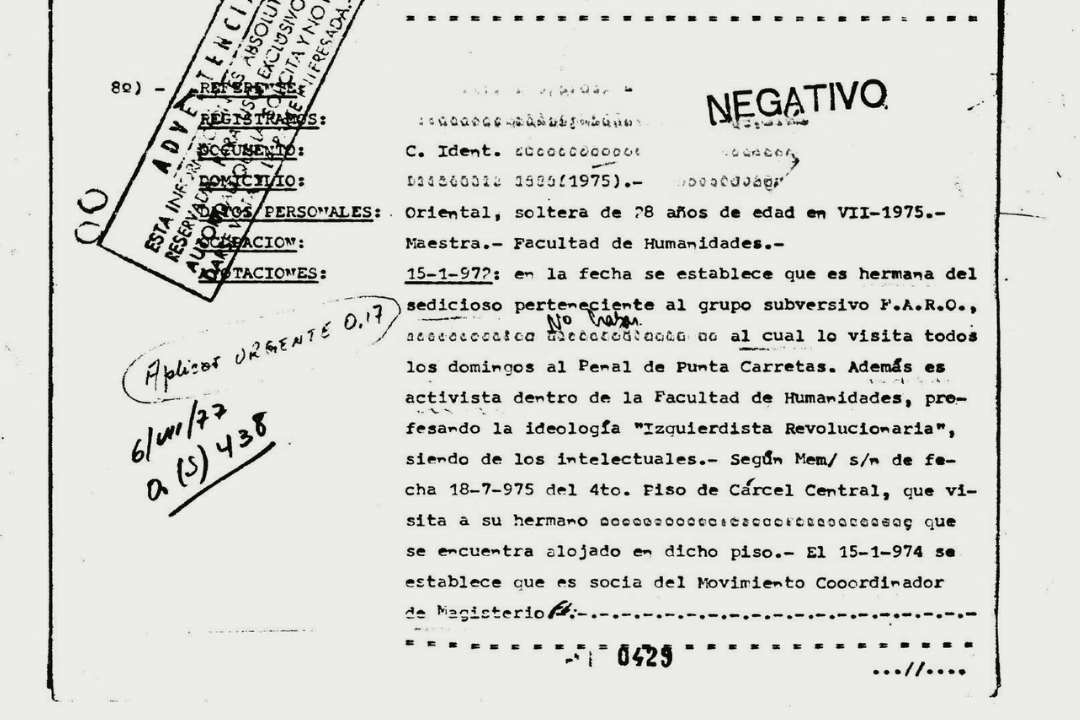
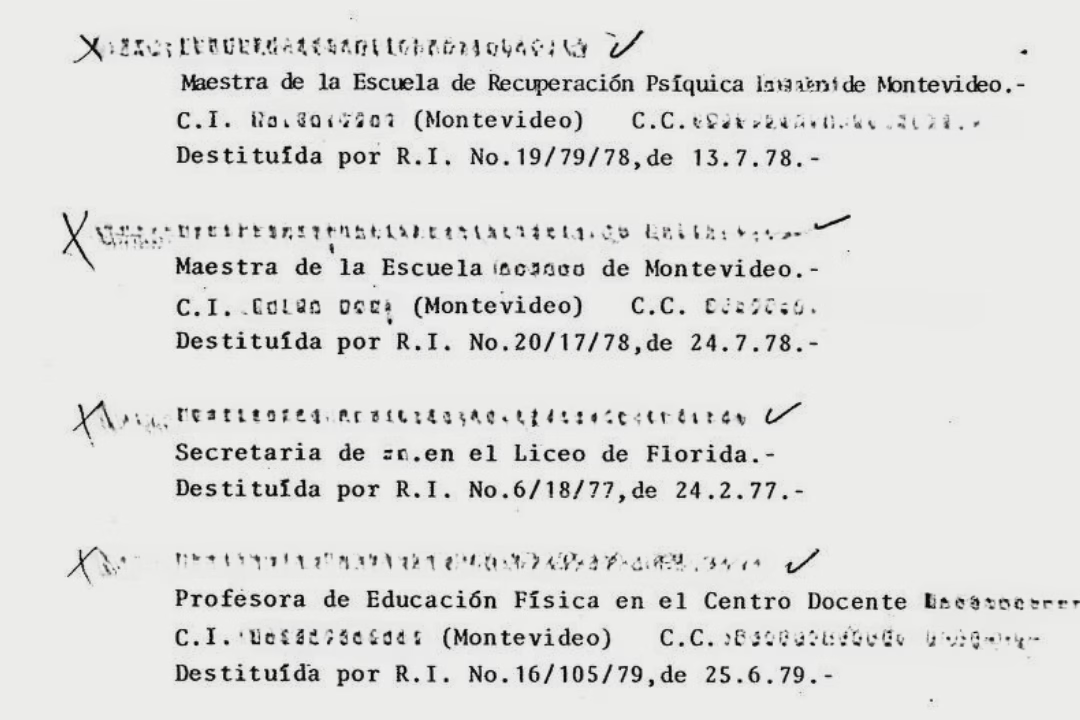
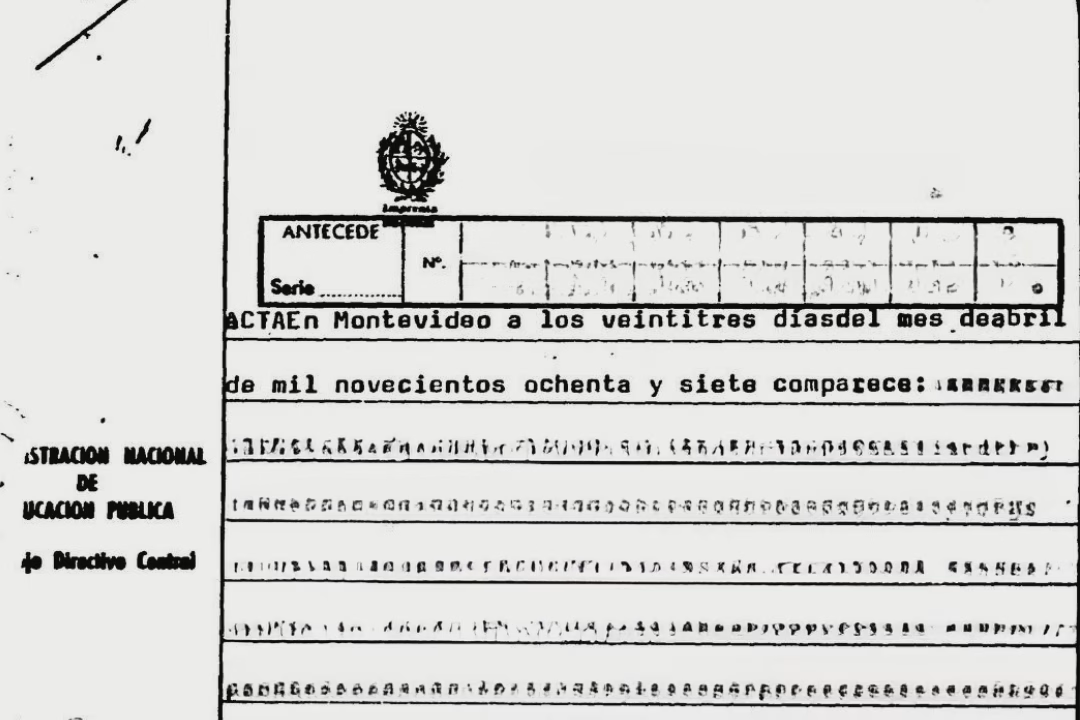
All of the collages shown are screen grabs from the documents. Identifying details have been obscured to protect the identities of those involved.

According to the file the armed forces had on her:

Subject: Uruguayan, single, 28 years old (as of 1975). Occupation: Teacher – Faculty of Humanities.

15/1/1972: The subject is the sister of [REDACTED], a subversive member of the FARO group, who visits him every Sunday at Punta Carretas Prison. She is also an activist within the Faculty of Humanities, adhering to leftist revolutionary ideology and considered an intellectual.

28/10/1975: A memorandum (dated 18/7/1975) from the 4th floor of Central Jail confirms she visits her brother, [REDACTED], who is detained there.

1/6/1976: As of 15/1/1974, she is a member of the Teachers’ Coordinating Movement.

17/8/1977: She visits detained subversives at Punta Carretas. Her home is searched due to rumours of a possible escape attempt by subversives, but nothing is found.

13/9/1977: She applies for a passport with the intention of traveling to the United States of America.

No one was safe

I chose to tell her story over my great-uncles’ because she was an ordinary woman who witnessed, slowly but surely, the world she knew collapsing around her. In 1978, she was purged from her role as a teacher and psychologist for children with special needs, another victim of the regime’s blacklist. My mother, also a teacher, still shares halls with many unqualified instructors who were hired due to the blacklisting of thousands of properly trained Uruguayan educators deemed ‘dangerous’ by the military regime. It’s an open secret who was appointed on merit and who gained positions through loyalty to the military authorities – chiefly wives and children of armed forces members.

After the return of democracy, in 1987, she testified as a witness to the unlawful detention of a group of teachers in 1973. They were forcibly taken from their school, held incommunicado for hours and subjected to home raids where authorities seized books, none of which were ever returned. No explanation was provided for these actions.

Prior to their detention, the teachers had been summoned for private interrogations by the intelligence services, demanding they justify their involvement in a workers’ union. Without any formal charges or credible allegations, they refused to comply. Their defiance led to their violent apprehension on school grounds.

Making amends

My mother, born in 1974 remembers, embarrassed, calling her a spinster. She was not. She met who would be her husband on these many visits. He was one of the political prisoners who spent the longest in jail, from 1972 to 1985, only being freed upon the return of democracy. Both she and her husband received financial compensation for the political prosecution they were subjected to, with the Uruguayan government granting special compensatory pensions for victims of the dictatorship, aimed at redressing the harm caused by political repression and lost labour rights.

She died earlier this year of old age. She never had children, as she was too old by the time her lover was finally released. I remember her as an elegant woman, tall, slender, well-traveled, and well-spoken. We weren’t particularly close, but I cherish the outings she took me on and the books she gave me. Now, writing this, I can’t help but wonder, do I really want to ask her what it was like? Not because I’m not curious, but because I might not be able to handle the answers.

[the_ad_group id=”331″]

Latest

Namasté — Vegetarian restaurant in Montevideo

Namasté is more than just a vegetarian restaurant in Montevideo. This colourful, family-run spot has been serving vegetarian and vegan food since 2008. And the food is only part of the experience. Come for a relaxed meal, stay for the atmosphere, the friendly service and the chance to slow down for a while.

Tango dancing in Montevideo

Tango dancing in Montevideo

Dance tango in Uruguay. Whether a complete newbie or you already dance, the tango scene in Montevideo is a great way to make friends.

Popular

Leave a Reply

Your email address will not be published. Required fields are marked *

Related articles

Is Uruguay safe

I’ve lived all over the world. Here’s my evaluation based on my experience living and travelling in Uruguay for the last 20+ years.
Copy link