Living in Punta del Este, Uruguay: a Belgian entrepreneur

Tom on his first year living in Punta del Este, Uruguay: adjusting European expectations, opening a business and cost of living.
By Karen A Higgs
Tom-Cover-Punta-del-Este
Last updated on October 30, 2026

Store

Find Guru’Guay products and services for your travel or relocation to Uruguay

Vacation

→

Relocation

→

[the_ad_group id=”331″]

Living in Punta del Este, Uruguay: entrepreneur's frank first year

Tom is a data guy. When he started looking for a new country to live in, he ran the numbers, and Uruguay came out on top. A year ago he moved from Belgium to Punta del Este, Uruguay’s most famous beach town, with his partner Natali and his French bulldog, Storm. Within months he had bought a house, set up a company and was renovating a shop to open one of the first Leonidas Belgian chocolate stores in Uruguay.

Tom arrived with what he calls his European mindset: he likes things done yesterday, not tomorrow, and he was used to doing everything himself. In Uruguay, everything takes longer, and there are more things you need professionals for. He planned to open his shop in December, in time for high season. He opened on May 20, long after high season had finished.

In this interview, Tom talks candidly about why adjusting your expectations is the most important thing you can do when you move to Uruguay from Europe. He also covers what living in Punta del Este is really like, how he got his residency before he moved, what things cost, and what he’d do differently.

This interview has been edited and abbreviated for brevity. Watch the full video interview on the Guru’Guay YouTube channel.

Key facts: living in Punta del Este with Tom

From: Limburg, Belgium

Moved to Uruguay: September 2025, with his partner and his dog

Lives in: San Rafael, Punta del Este

Works: Owns a Leonidas Belgian chocolate store in Punta del Este

Residency: Started in Carmelo in 2024, before moving, with Sierra Atlántica; permanent cédula approved in 2026

Electricity: About US$130 a month in summer, US$200 in winter (large house, two people)

Gym: 1,500 Uruguayan pesos (about US$60) per person per month

Bringing his snub-nosed dog from Europe: About €4,000

Biggest adjustment: Letting go of European expectations; everything takes longer, so add a week or two to every plan

Top advice: Take time to settle in, and rent before you buy

Why did you choose to move to Uruguay?

Tom: I’m a bit of a data guy, so I checked the data, and with Uruguay everything matched. It’s a very safe country, it has a very stable economy and good healthcare. We arrived on 25 September last year: me, my partner Natali and my dog, Storm. My mum came along too, to see the house I’d bought.

How did you research your move to Uruguay?

Tom: It actually started with Guru’Guay. When you start researching Uruguay, it’s very hard not to stumble across the website. There’s so much information there that you really need to know, and I thought, if I really want to move to this country, I need to contact this lady. I did an online consultation first, to check that Uruguay fitted our needs, and then Natali and I had a VIP day during our exploratory trip to Uruguay.

Why did you choose Punta del Este instead of Montevideo?

Tom: Montevideo was our first plan. But every time we drove over the hill at Punta Ballena and saw the peninsula, this gorgeous little city, Natali and I looked at each other and our hearts started beating faster. People who travel from Montevideo will know exactly what I’m talking about. The second reason was business. Punta del Este has a much more international audience, with a lot of Argentinians, Brazilians and Europeans.

What’s it like living in Punta del Este all year round?

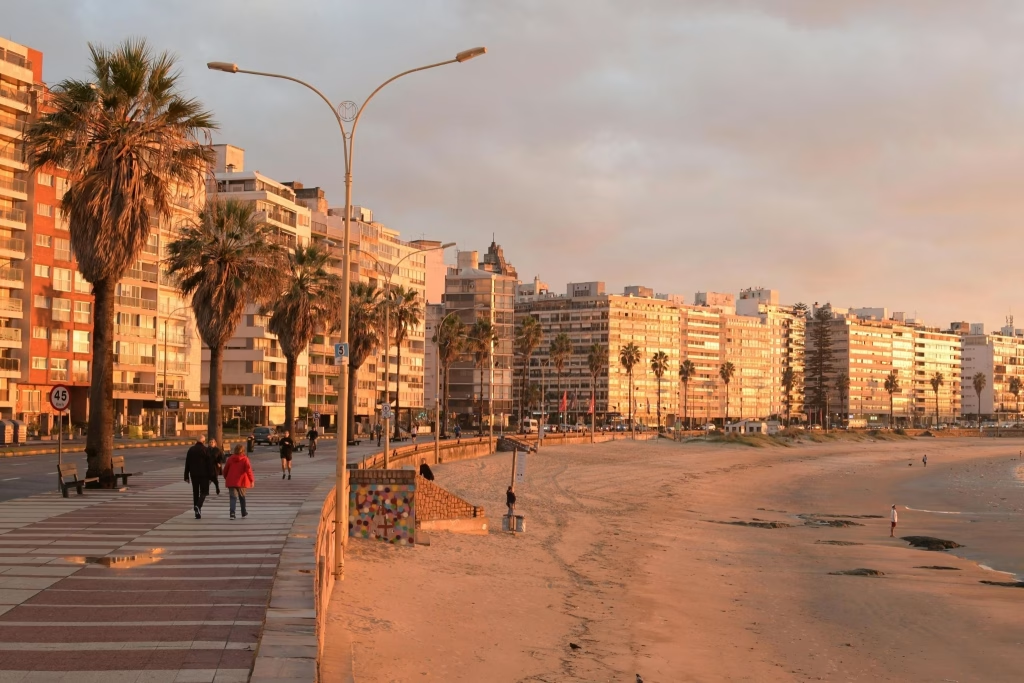
Tom: It’s calm and very laid back. There are only a few weeks in high season when it gets really crazy. You plan around those weeks a little, but even living near the centre, we haven’t had any problems.

What is the San Rafael neighbourhood like?

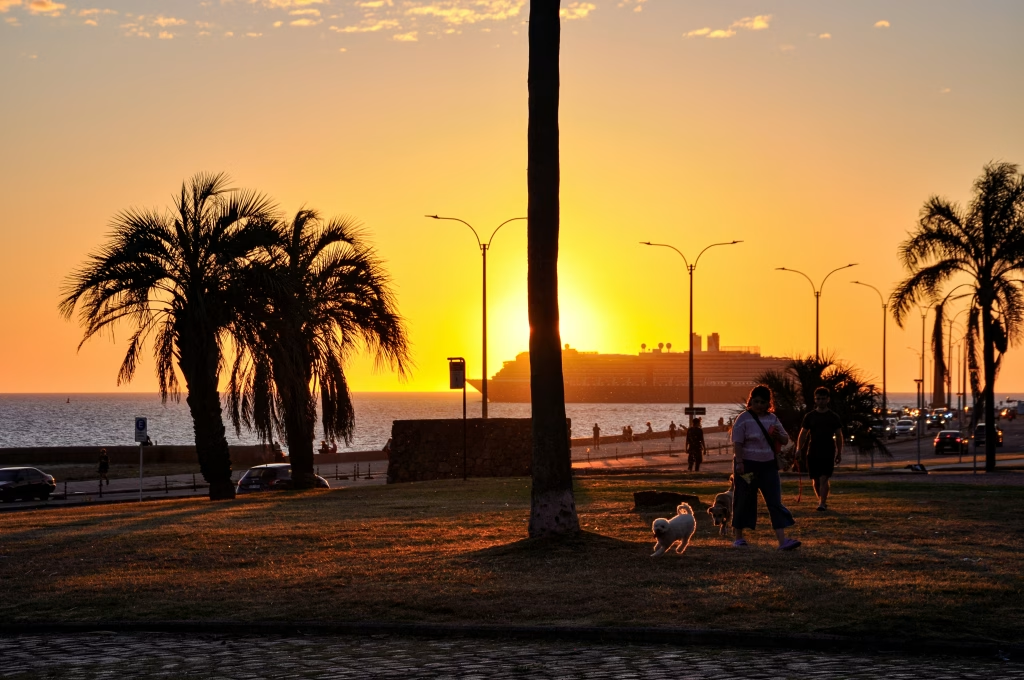
Tom: We’re in San Rafael, on the border with San Rafael Golf. It’s very quiet and full of nature. Our whole street is lined with palm trees, so driving down it feels like being on holiday. We’re close to everything, the peninsula and Maldonado (the administrative capital of the department of Maldonado, where Punta del Este also is), but away from the busy peninsula area.

Is Punta del Este safe?

Tom: Yes, Punta feels very safe. You can walk around with your phone in your hand. Natali sometimes takes Storm for a walk around the block in the evening. There are some sketchy barrios (neighbourhoods) in Maldonado [the capital of the department]. But Punta itself, perhaps because it’s so touristic, feels very safe.

Can you get Uruguayan residency before you move?

Tom: Yes. We worked with [relocation specialists] Sierra Atlántica, and they arranged everything. They booked our appointment in Carmelo, about three hours from Montevideo, because the waiting list there was shorter than in Montevideo or Punta. On one of our visits we went to Carmelo, did what we needed to do, and saw Colonia del Sacramento on the way. Then we went back to Belgium.

Why was getting your permanent cédula difficult?

Tom: Your first cédula (Uruguayan ID card) is en trámite, meaning your residency is in process, and it’s valid for two years. To get your permanent cédula, you have to show that you have an income in Uruguay. I’d found an accountant by Googling, the European way. She charged a very high fee and wasn’t proactive. I have an SAS (a type of Uruguayan company, which Sierra Atlántica helped me set up), and when I asked her to set up an income for me, she said that with an SAS you can’t have an income. That wasn’t actually true. Sierra Atlántica got involved to push things forward, but by then we were already late [to renew on time].

Tom’s story has a happy ending. He received notice that his permanent cédula had come through on the very same day we filmed this interview. Funnily enough, the same thing happened with Shelley and Chas, whose cédula problem was also solved on the day we filmed with them.

How do you find people you can trust in Punta del Este?

Tom: Don’t Google it yourself. Ask your trusted network. I could have sent that accountant’s quote to Karen at Guru’Guay or to Sierra Atlántica and asked, “Is this a fair price?” (Guru’Guay keeps a list of trusted relocation service providers for exactly this reason.) There’s also a big WhatsApp group called Punta Expats where people are always asking, “Do you know an accountant? An electrician I can trust?” You also need to watch out for the “gringo tax”. An Argentinian couple we’re friends with put it best: “in Punta, there’s a price for Uruguayans, a price for Argentinians and a price for gringos [foreigners from the north]”. So check and double-check, get several quotes and use common sense.

What’s the biggest adjustment when you move to Uruguay from Europe?

Tom: Your expectations. I’ve been an entrepreneur in Belgium for more than 20 years. I have the experience, I have the guts, and I’m too young to sit still. So I came in and went straight in: building the business, organising our private life, all at once. And I came in with my European mindset. I like things to be done yesterday, not tomorrow.

It doesn’t work like that here. Everything goes slower. If you want something done yesterday, like me, add one more week, or sometimes two. I think that’s the most important thing for anyone watching: adjust your expectations.

The other big difference is that in Belgium, I was always used to doing everything myself. Here, you need the right people. There are many more things you have to involve professionals in, like an architect or an accountant. In a new country, you want to do things the correct way, so I wasn’t taking any risks.

How long does it take to get a business running in Uruguay?

Tom: Longer than you think. We arrived at the end of September, and my plan was to open in December, before high season. Three months, easy, I thought. We opened on May 20, long after high season had finished. You need permits. You need an architect, because to do a reforma (renovation) legally, the BPS (Uruguay’s social security agency) needs an architect’s signature. In Belgium I’d do that myself. We import our chocolate from Belgium, so every product had to be registered. Then you need to find the right suppliers and get everybody working together as a team. Everything takes time.

Now the business is going well. Starting in low season turned out to be a good thing, because we can build up step by step. We sell pralines, which Uruguayans call bombones, with more than 50 varieties, and everyone who comes in gets to taste before they buy. You’ll find us at Leonidas Punta del Este.

What is the cost of living in Punta del Este?

Tom: Overall it’s a bit cheaper than Belgium, but at first we were spending far too much. We’d go to the supermarket and buy what we recognised, like Italian pasta. After two months I reviewed our expenses and realised Uruguay is an import-driven market: everything imported carries high taxes. Once we started buying local products (they make great pasta here) we cut our grocery bill by at least a third.

The gym is 1,500 pesos (about US$60) per person a month, more than the €20–25 you’d pay in Europe, but still fine. Electricity is expensive, especially in winter, because houses here aren’t built for the cold. Ours has single glazing and high ceilings. We heat with a wood stove and air conditioning, and pay about US$200 a month in winter. In summer the high ceilings keep the house cool, so it drops to about US$130.

For more on prices across the country, read Is the cost of living in Uruguay really so high?

How easy is it to make friends and learn Spanish in Punta del Este?

Tom: We’ve made friends at the gym, an American and Venezuelan couple, and a couple who ran a coffee business here for 20 years. They started as customers and now help new expat business owners, because they know how hard it can be.

As for Spanish, when your partner speaks it, you take advantage. Natali is from Peru, and at the beginning she translated everything. Now she runs the shop and I run the household, so I’m forced to speak. I still make mistakes. One day I offered a customer a chocolate and said “Te quiero probar,” which means “I want to taste you,” instead of “¿Querés probar?” She blushed, Natali apologised, and I only found out afterwards what I’d said. But Uruguayans are very patient with your Spanish.

How do you bring a dog to Uruguay from Europe?

Tom: With a lot of paperwork. Storm is a French bulldog, and because he’s snub-nosed, he couldn’t fly in the cabin, so he had to go in cargo. He needed several vaccinations and a leishmaniasis test, which even our vet in Belgium had never heard of. No lab in Belgium could do it, so his blood samples went to Italy. Then the Belgian government had to stamp and sign the paperwork, our freight forwarder and a customs agent in Uruguay both had to check it, and finally he flew for almost 20 hours. I contacted ten freight forwarders. Three refused because he’s snub-nosed, and one quoted €10,000. In the end it cost about €4,000. When he arrived, he went straight out into the garden to explore. He was fine.

Others moving from Europe with their pets have less issues. Keitsa came from Austria and shared her experience.

What would you do differently if you moved to Uruguay again?

Tom: Take time to settle in. With my European mindset, I wanted to do everything at once: buy a house, build a business, organise my private life. It put a lot of pressure on me. If I could turn back time, I’d rent a nice apartment for a year or two, get to know the country and the people, and simply enjoy being here. You don’t have to build your whole life in the first few months. Don’t go all in like me.

Thinking of living in Punta del Este yourself?

Tom’s journey started with a Guru’Guay consultation and a VIP day. Here’s where you can start yours:

Find out if it’s for you. Read Should I visit Punta del Este?, 8 things to do in Punta del Este and our guide to the best beaches in Uruguay.

Explore the coast. The Guru’Guay Guide to Uruguay has chapters on Punta del Este and the beach towns around it, from Punta Ballena to José Ignacio.

Talk it through. A private consultation helps you work out whether Uruguay, and which part of it, fits your needs.

See it for yourself. On a Punta del Este VIP day, you spend a day with a local expert exploring the town and its neighbourhoods.

Rent first, then buy. If you’re following Tom’s advice and looking for a place, you’ll find our recommended realtors in Punta del Este on our real estate in Uruguay page.

Get the right help. Find residency specialists like Sierra Atlántica, accountants and more in our trusted relocation service providers, and start with Living in Uruguay: our guide to life, logistics and residency.

Watch the full interview with Tom on the Guru’Guay YouTube channel [VIDEO LINK].

Guru’Guay regularly interviews English-speaking foreigners living in Uruguay. We choose people who have all had very different experiences. Everyone we interview is from a different socioeconomic background. Some are retired, others have their own online businesses. Some came with their families, some alone or with their partner. A large percentage are LGBTQ (thanks to Uruguay’s historic progressive culture and politics).

What all the interviews have in common is that I ask people to talk candidly about life in Uruguay, and what they find difficult as well as what they love.

Watch the entire series “Living in Uruguay (as a foreigner)” on YouTube, and make sure you hit subscribe to never miss a new interview.

[the_ad_group id=”331″]

Latest

Popular

Leave a Reply

Your email address will not be published. Required fields are marked *

Related articles

Copy link